
It's not the plant
Your capacity is never only yours — it's you × the field you're planted in. How to read the field, read the plant, and decide what to do.

I walked through the garden with the dogs this morning, as we do every morning. It’s how I get the dirt truth — seeing how things are really progressing, what’s working and what isn’t, so we can adjust while it still matters.
This morning, the dirt truth stopped me at the Rampicante.
Same plant, different fields
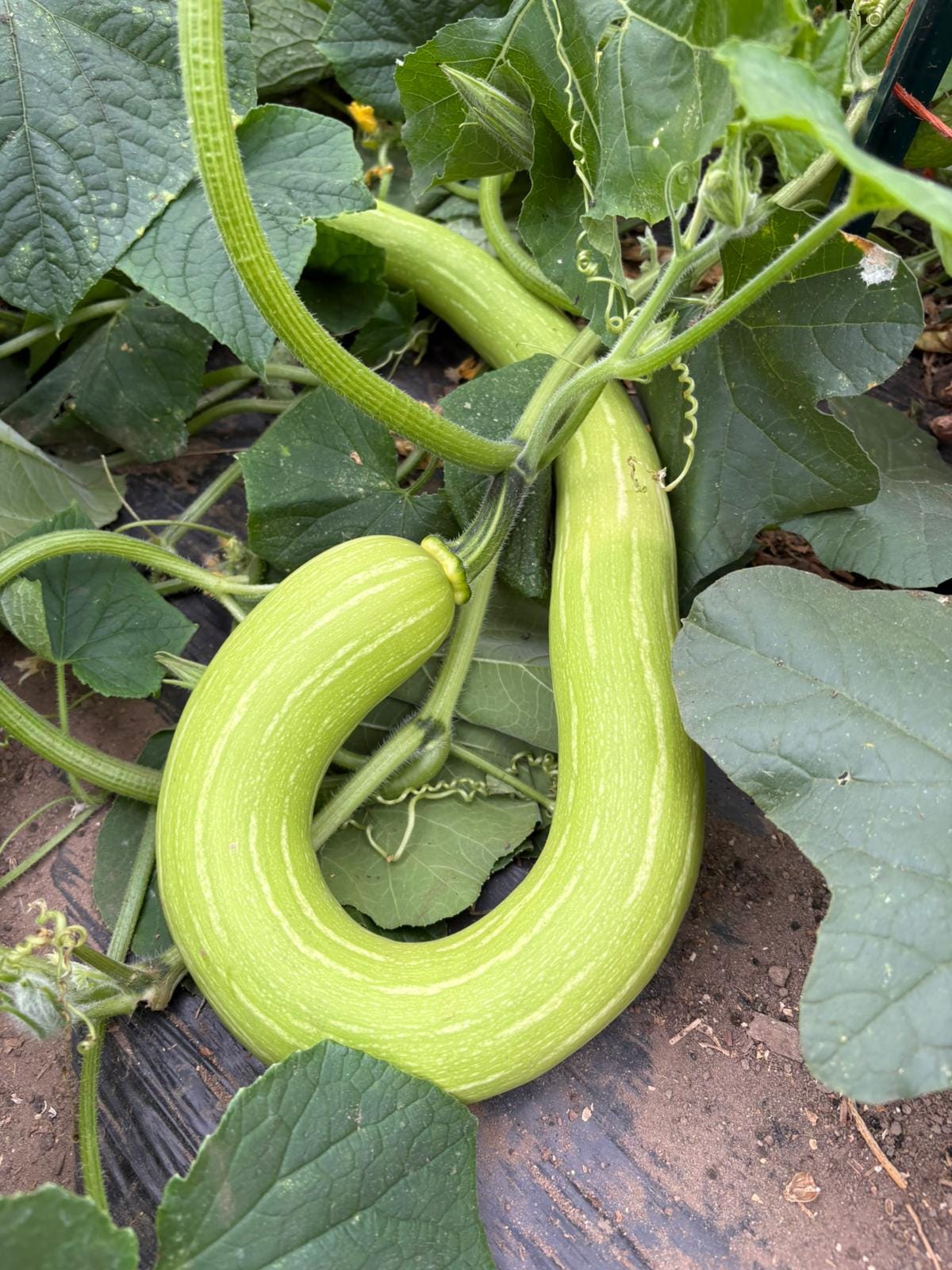
I planted a good number of Rampicante zucchini this year — the incredible giant green-and-white striped squash, delicious at every stage of growth. We planted them in several spots around the garden: some in the soft, living soil of the greenhouse, others at the edge of the more compacted outside rows.
Same seed. Same planting week. Same farmer. And the greenhouse plants are now half again the size of the ones in the compacted rows.
The reasons have nothing to do with the plant. Sun, irrigation, and above all the soil. Compacted soil is hard ground — water can’t spread through it. It doesn’t reach every root; it runs off, or flows through a few narrow channels, and every plant fights for what trickles through. Living soil is the opposite: water moves everywhere, and every root gets what it needs to do its work.
Hold that image.
Two leaders, one question
A senior director asked me the other day: “How do I manage it all? How do I even know how to manage it all?”
Another told me a serious family health issue had upended everything — and in the middle of it she realized none of it matters. What she used to care about, the optics of a situation, definitely doesn’t matter anymore. What matters is her team and the impact of the work.
Both are excellent at what they do. There is no doubt about their craft. Both work in organizations scaling toward major growth targets. And yet they’re landing in very different places in their own growth and capacity — because they’re planted in very different fields.
His organization is a meritocracy where speed and quality matter, and they care about the culture they’re building — they want people to “be able to do your best work here.” That’s living soil: judgement, information, and opportunity flow to every root.
Hers moves fast, always under pressure, in a highly politicized environment where — her words — “only 3 or 4 people’s judgement matters. Performance is not a meritocracy.” That is compacted ground. Water flowing through a few narrow channels is what politics is, seen from inside the soil. And every root fights for what trickles through.
It’s not the plant
Kurt Lewin, a pioneer of social psychology, offered a formula that still holds in today’s organizations: behaviour is a function of person and environment. In farm terms: growth = plant × field.
So here is the lesson the Rampicante taught me: your capacity is never only yours. It’s you × the field you’re planted in. Stop reading your lower capacity as a personal failing before you’ve read the field.
The practice: read the field, read the plant, then decide
Read the field. Where does water actually flow here? Who does judgement pass through? How is success measured — and are the criteria clear to everyone, or only to the few? Answer honestly; this is about the ground, not about you.
Read the plant. Run your dirt-truth check-in. Where is your capacity today, out of 10? At a 7 — what’s working, so you can keep doing it? At a 4 — what restores you: rest, play, a turn toward joy? Maybe where you are is enough for what you’re trying to grow. Maybe you need to change your state before you change anything else.
Then decide: amend or transplant. Some fields can be amended — a conversation that loosens the ground, a practice that gets water to your roots. And sometimes the courageous answer to “how do I manage it all” is not here.
Regular readers know the farm is facing its own transplant question — the strawberry patch is still undecided, and the trap by the shed has caught nothing but air.
What the right field yields
One last thing about the Rampicante. A farm friend recommended them for their storage life, and she was right: no processing, just a cool shelf out of the sun, and last year I was still eating them in May. That’s what growing in the right field does — the yield outlasts the season.
That’s true for leaders too. Get the field right — or get into the right field — and the growth doesn’t just show up in this quarter’s harvest. It keeps feeding you long after.
The dogs and I will keep walking the rows every morning. It’s the only way to know what the ground is really doing.