
They're back?!
The groundhog is the easy problem. The hard one is letting go of what still works — a three-question practice to figure out what to let go and what to keep.

Tiky and Bina alerted me first — sniffing all around the shed by the main greenhouse. I immediately got worried. This is where the groundhogs had been at the start of the season. Could it be they were back?
I confirmed with C the next day. Yes — he’d seen one large creature and already set a trap. We are on the hunt. This time, I’m not sure relocation will be enough.
The vigilance we know how to do
On the farm we are constantly optimizing for growth. Lately that has looked like vigilance — a daily ‘killing’ of pests: the Japanese beetle attacking the fruit trees, the squash beetle, the potato bugs going after the Rampicante Zucchini and potato plants. And the daily maintenance of every system that ensures our growth: irrigation, weeding, harvesting, pruning.
In our organizations we do the same — how do we get more profit, faster, more efficiently, ideally at scale.
And for ourselves. A leader I coach asked me recently: “How do I know this experience will enable me to be the best leader I can be?”
Underneath all three is the same question: How do we know what is serving us, what needs to shift, and what needs to be let go?
The groundhog is the easy case
I know that sounds strange from someone currently at war with one. But the groundhog is at least obvious. It announces itself — two dogs at a shed will tell you. The threat is external, the response is clear: defend what you’re growing. Vigilance is a skill every farmer and every leader builds early, because the attacks come whether you’re ready or not.
The hard case doesn’t announce itself. The hard case is the strawberry patch.
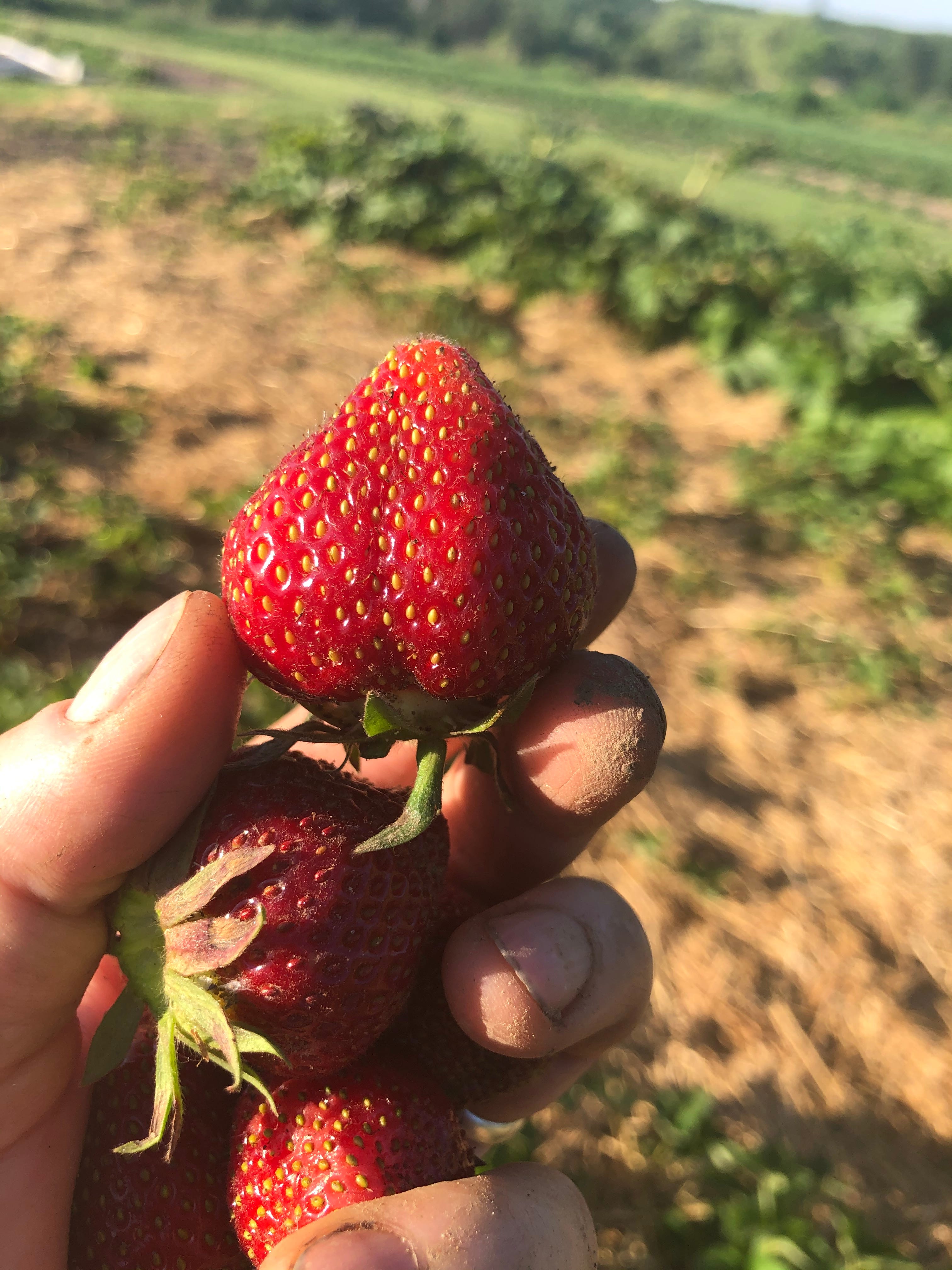
The strawberry patch
I am considering ripping up the strawberry patch. It’s been here since the beginning — the first significant thing we planted and it yielded so much joy its hard to imagine destroying it to build an outdoor kitchen and eating area. As the farm pivots into a leadership, team and learning centre this space is perfect because it’s in the centre of the garden - the heart.
There is nothing wrong with the strawberries. They still produce. Nobody is sniffing at them in alarm. And that is exactly what makes them the harder problem: they occupy the very ground the future needs.
Fighting what attacks you is resilience. Facing what still works but no longer serves where you’re going — that takes reflection, and courage. No trap will do this for you.
What this looks like in the organizations I coach
When I go into organizations, I typically coach most of the leaders across the Delivery organization — Engineering, Design, Product, Data, Security, Platform and IT — and the senior-most leaders. What they hire me for is to help retain and grow their top talent, ensure business impact and accelerate their growth. Because I’m across so many rooms, I’m very good at seeing the patterns that support — and erode — the culture and the business goals.
When I see risk to business impact, I act on it. In a recent follow-up ‘trust’ conversation with a senior leader, what we designed together was to deepen and widen our coaching conversation to include team and culture — for me to give him a heads-up on the trends I’m seeing across the teams.
That is observation at the organizational level: someone deliberately watching for both kinds of threat. The groundhogs — the obvious attacks on what you’re growing. And the strawberry patches — the beloved legacy things (a who, a what, or a how) still occupying the ground the strategy needs.
The practice: three questions, three altitudes
Here is how to observe — yourself, your team, your organization. Ask the same three questions at each altitude: serve secure shift
What is serving us? Tend it — and maintain it daily, the way we tend irrigation, weeding, pruning. For me personally this is a daily measure of my capacity and the practices that hold it: meditation, exercise, journalling, eating well, and noticing the quality of my sleep so I can adjust. For you it might be the team rituals and rhythms that drive clarity and progress.
What is attacking us? Trap it, then defend against it — with daily vigilance, not annual reviews. That might be a need to improve decision making or make tough decisions faster and more transparently. Pests compound.
What no longer serves us? Transplant it, this is the courage question. It might be a what (a product, a process, a strawberry patch), a how (a way of working that got you here but won’t get you there), or — hardest of all — a who.
For yourself: run these in your journal weekly. They sit naturally on top of the dirt-truth check-in I shared in May — the check-in tells you where your capacity is; these three questions tell you what to do about it. For your team: put question 3 on a retro agenda and watch what happens. For your organization: make sure someone has the vantage point across rooms to see the patterns — and the trust to say them out loud.
On the ground where the strawberries were
The strawberries aren’t ending — they’re moving. Mencius said that before heaven confers a great responsibility, it first tempers the heart and mind. He didn’t mention the teaching methods. Mine came in two lessons: the groundhog, to teach me to defend what matters: my capacity and my joy. And the strawberry patch, to teach me to let go of what I love, for what matters more: my vision of the future.
I can already see the first team event in that space. A long table in the heart of the garden, food grown twenty feet from the plates. Faces full from a shared experience, leaders leaving elated — grounded in a vision they built together, on ground that has always grown good things.
The trap is set by the shed. The strawberry patch question is still open. Both, it turns out, are how a farm — and a leader — get ready for what’s next.
Great job, Mic, I think this is one of the best you’ve ever done. Simple, clear, understandable, and devoid of of the corporate jargon you have often used, which loses me. I simply don’t speak that language. Metaphors that contain timeless truths and are widely applicable are vastly more meaningful than anything we say that is situation specific, particularly if it’s said in lingo that developed a short while ago and will be forgotten just as soon. Jesus is probably the best known and most read exemplar of this. Almost everything he taught was in the form of a story. Two millennia later, the stories he told are still being discussed and applied by people all over the world. There are many more examples, of course. The power of story, of myth, was apparently somehow embedded in our DNA.